
The Small Piano Trade-Off: Soundboard Design
In Part 1 of this series, we looked at scale design and how string dimensions impact pitch and tone. But string vibrations alone don't make sound carry in a room!
To actually hear those strings, the instrument needs an amplifier. In an acoustic piano, the soundboard acts as that amplifier. It receives vibrational energy from the strings via the bridge and transduces it into sound in the air.
Because a larger soundboard moves a larger volume of air, bigger pianos naturally produce larger, fuller vibrations. When a maker shrinks a piano down, the soundboard's surface area drops drastically… and how that soundboard is designed determines whether the piano can truly "sing."
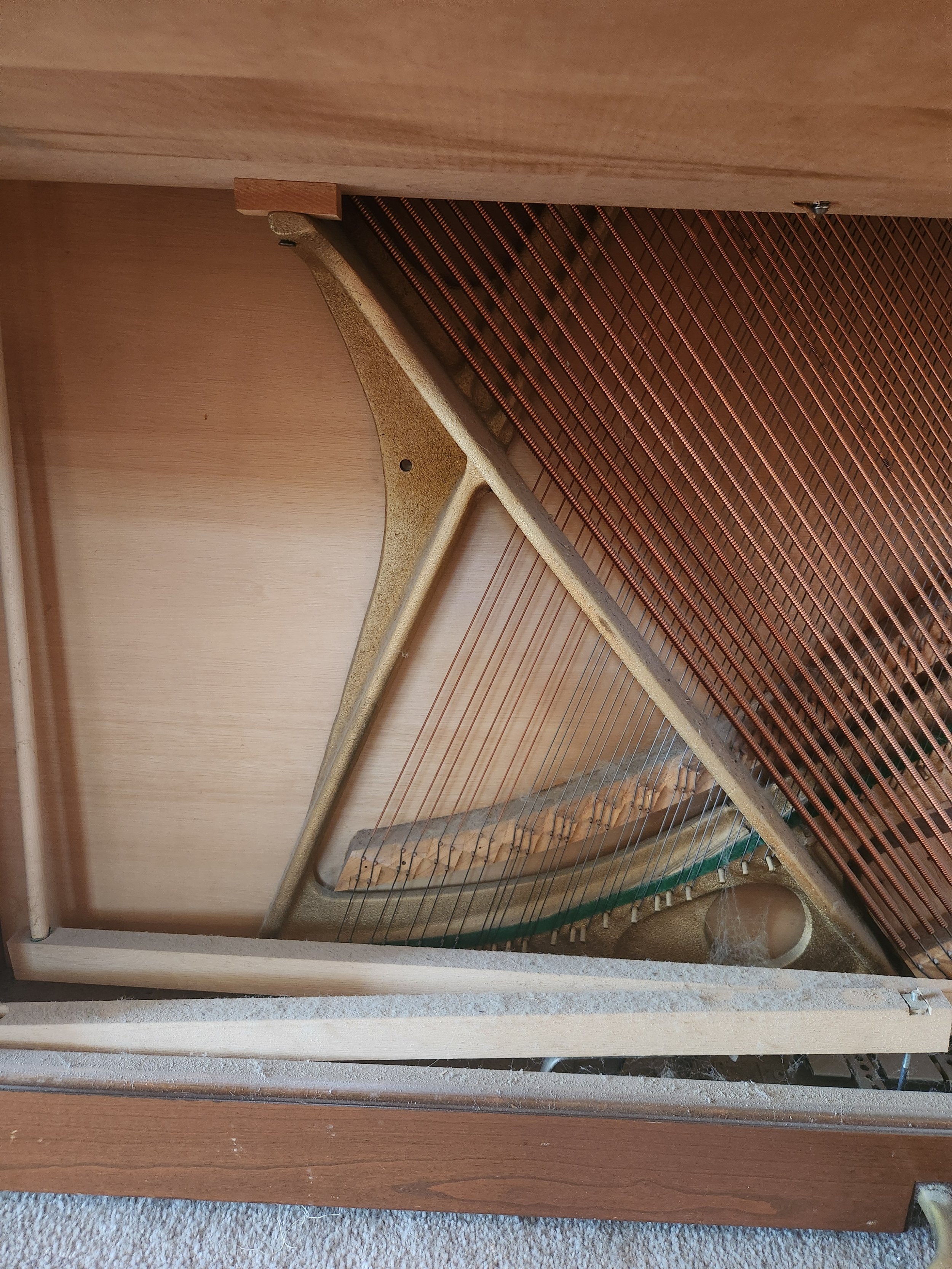
Understanding the Wood: Density, Thickness, and Grain
A soundboard determines how loud a note initially sounds when struck and how long it continues to ring in the air. To achieve maximum resonance and projection, piano designers carefully select specific types of wood (high-quality spruce is very common), paying close attention to its density, thickness, and grain.
Wood grain refers to the visible lines you see running across a piece of wood, which are formed by its natural fibres. Think of these fibres as natural pathways: sound energy travels best along the grain. Most quality soundboards are constructed with the grain running diagonally across the piano rather than vertically or horizontally, to maximize the length the sound can travel.
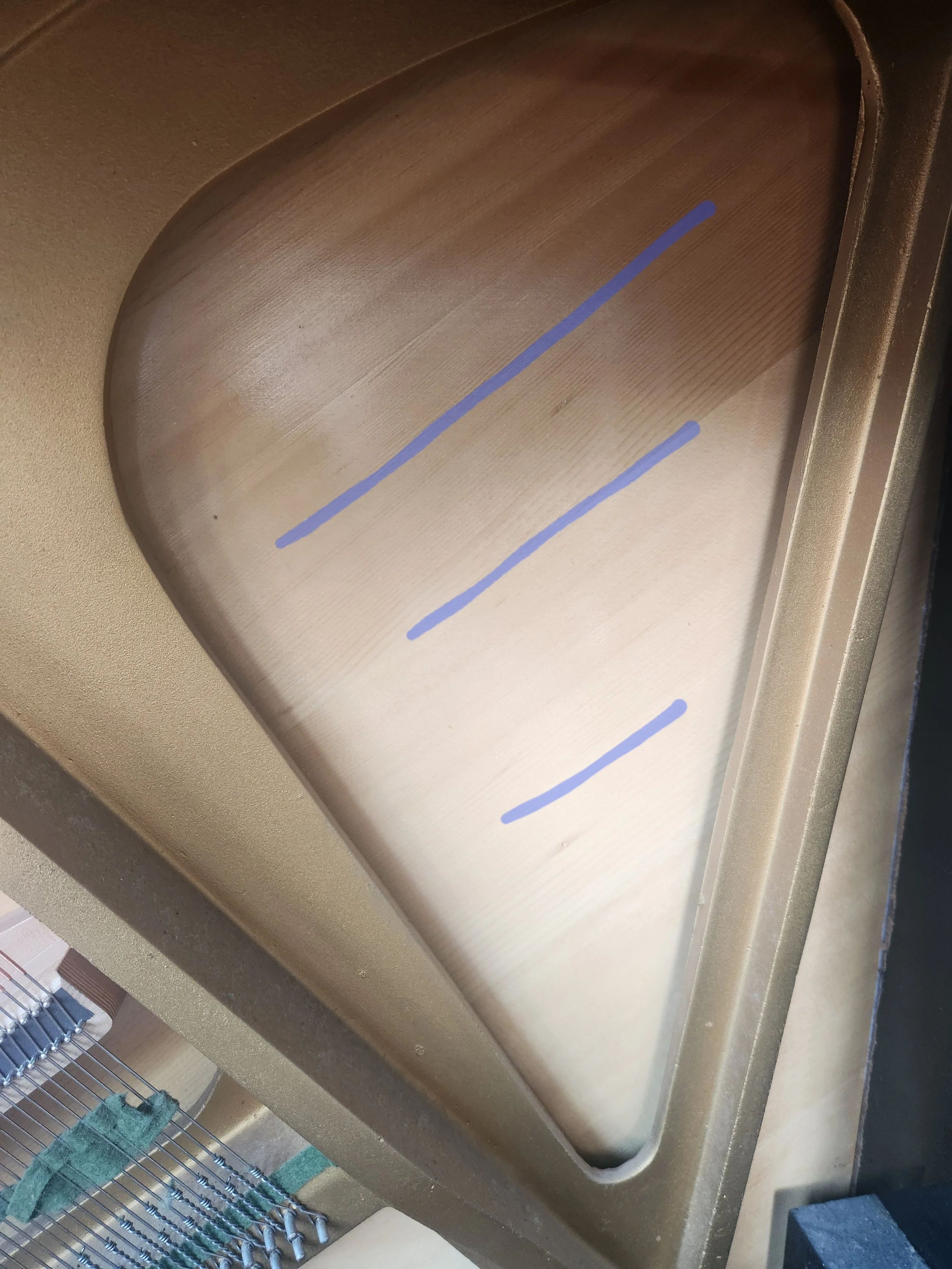
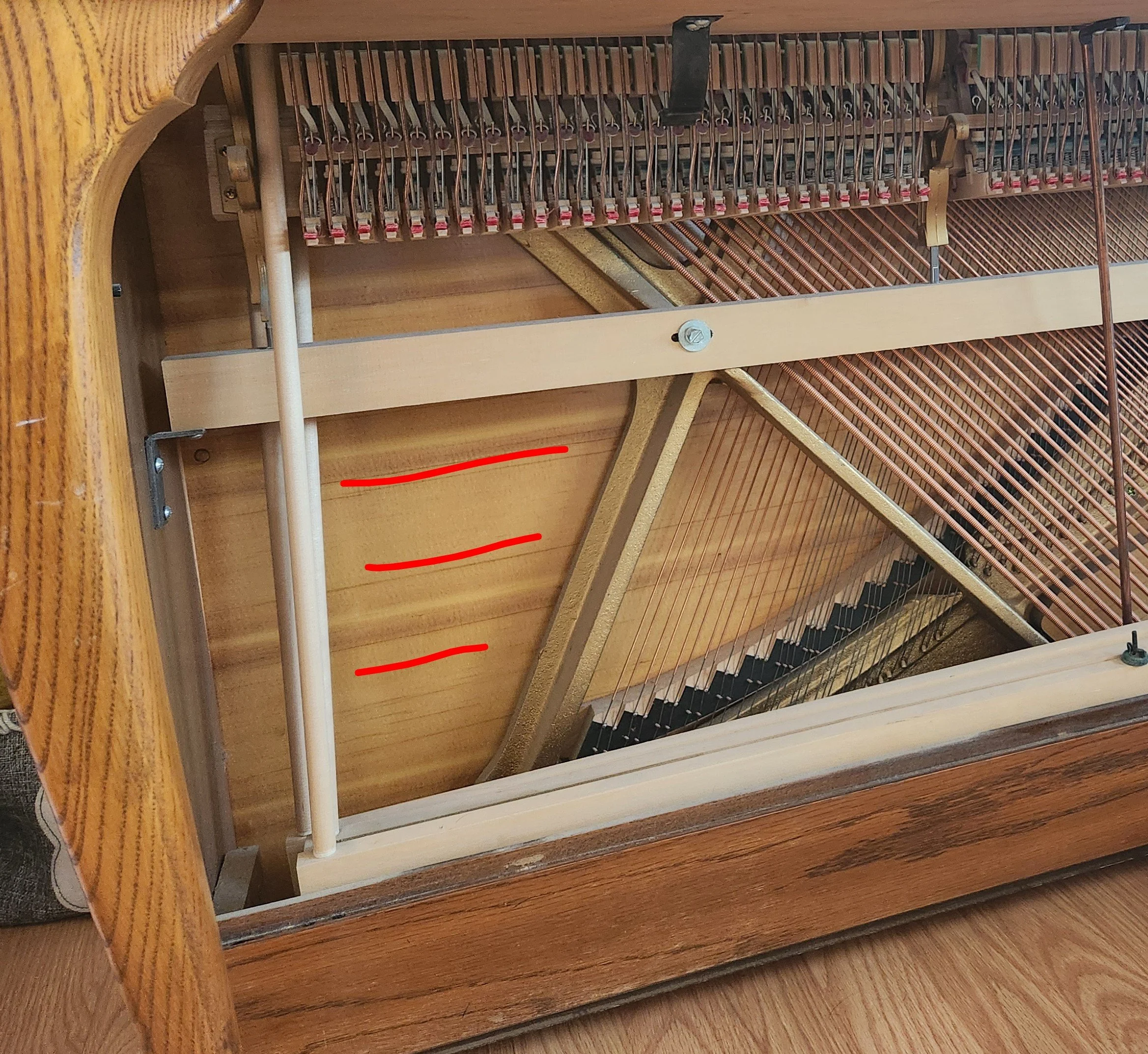
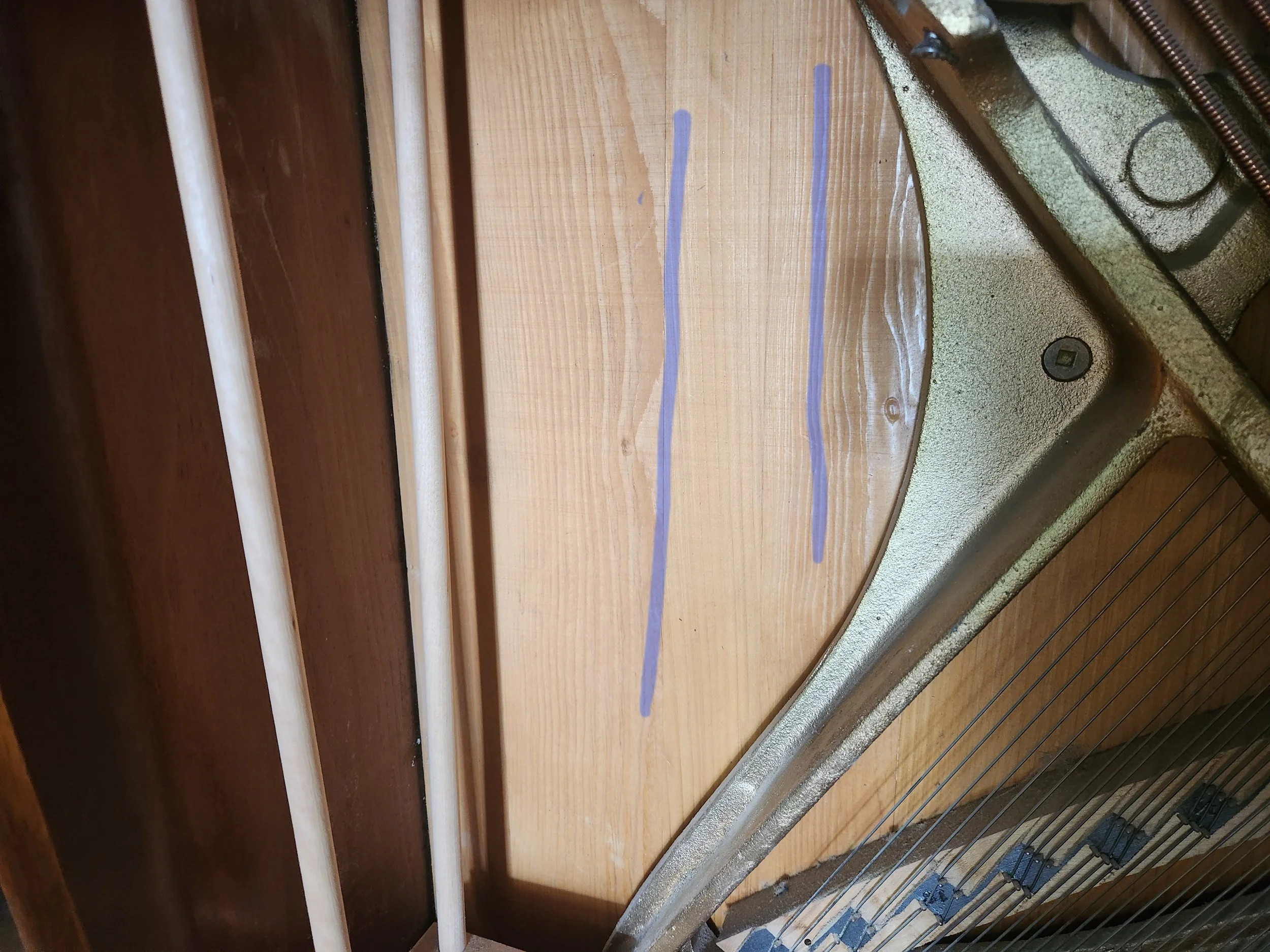
The distance between the lines in the wood grain tells a story about where the tree grew. A spruce tree that grows slowly in a region with long, cold winters produces very tight, closely spaced grain lines. This tight grain makes for a denser, stiffer, and vastly superior soundboard.
Because sound moves less effectively across the grain, designers attach wooden ribs to the back of the soundboard, running perpendicular to the grain. By helping sound spread across the board as well as along it, these ribs allow the entire soundboard to vibrate much more effectively.
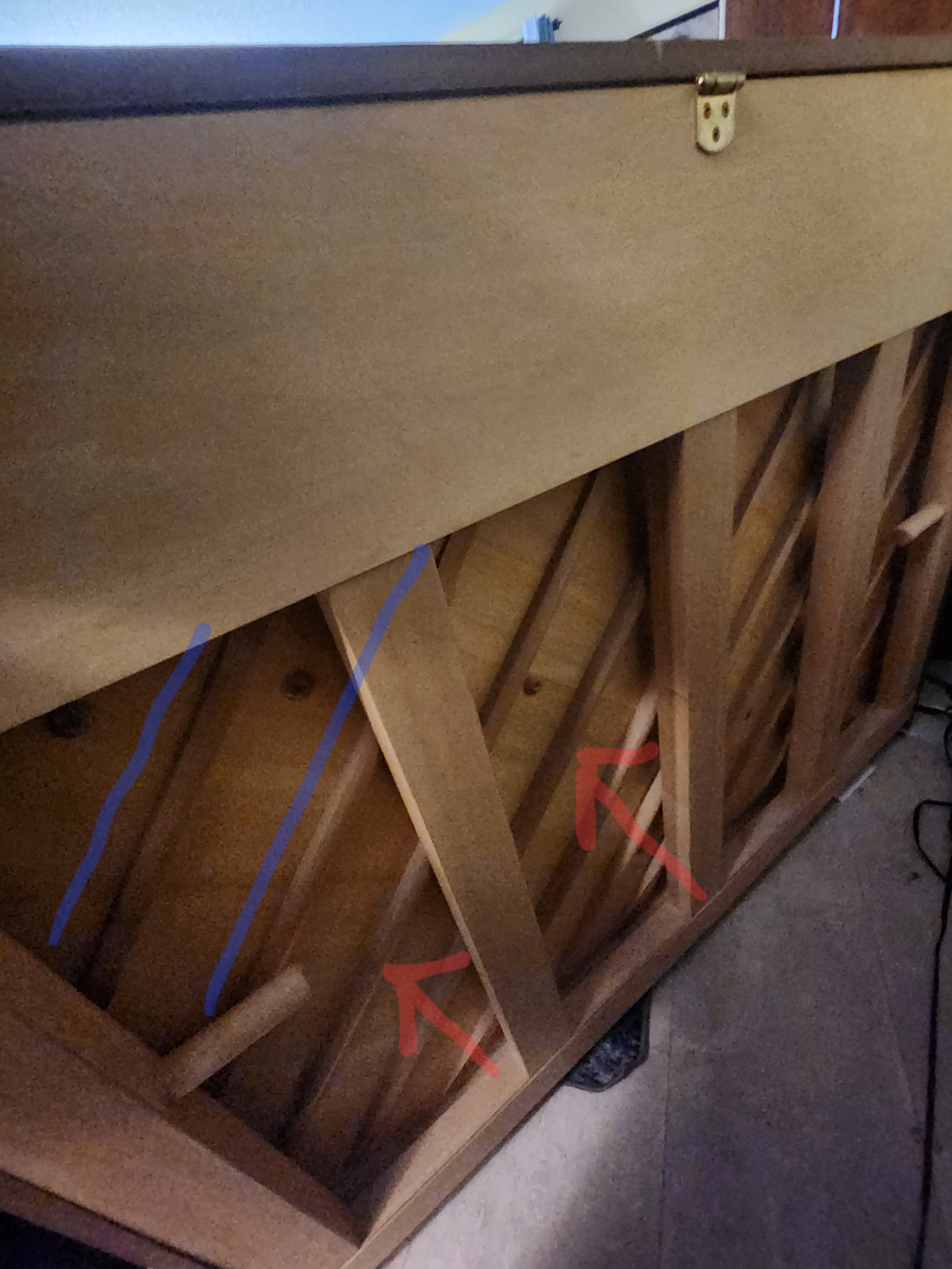
The Power of "Crown"
If you look at a flat pan lid versus a domed frying pan lid, you can easily picture the concept of “crown.” Crown is a precise, upward curve engineered right into the soundboard.
Without crown, a soundboard would just lie flat. But with crown present:
The strings press downward onto the bridge.
The curved soundboard creates upward pressure under the bridge.
This opposing force creates exceptionally firm contact between the strings, the bridge, and the soundboard, allowing energy to transfer smoothly from the strings, through the bridge and soundboard, and then into the air.
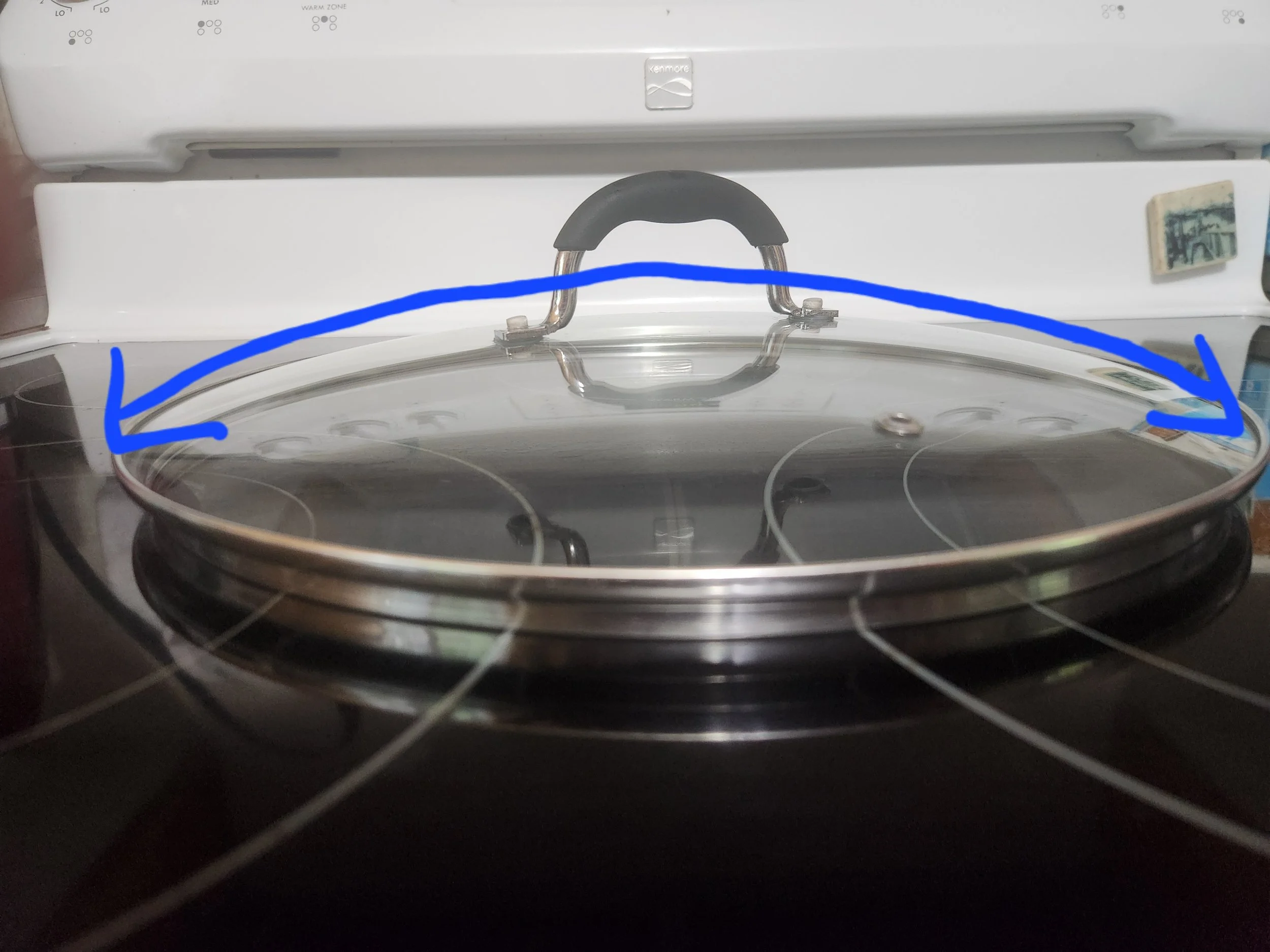
Humidity Warning: Crown can be lost if a soundboard dries out or undergoes frequent humidity swings. When the wood/crown shrinks, the upward pressure against the bridge fades, which is why maintaining steady humidity levels in your home is so crucial for tone.
The Small Piano Compromise
When a piano is shrunk down for convenience or budget, the soundboard isn't just smaller in area… it often utilizes lower-density wood with wider grain running horizontally or vertically. The placement of the bridge glued onto the soundboard can often work against, rather than optimize, the flow of vibrations.
While a large grand piano features a wide, tight-grained spruce soundboard that delivers rich sustain and powerful projection, a compact spinet or upright is much less effective. Without high-grade materials and optimal size/design, these smaller soundboards can struggle to sustain notes or produce the full, resonant tone more common in larger instruments.
The Bottom Line
A smaller soundboard has less surface area to move air, which directly affects projection and sound quality. Understanding how wood quality, grain alignment, and crown work together helps explain why two small pianos of the exact same height can sound vastly different.
Coming up in Part 3: We look at the piano's physical touch and examine key design!
Have questions about finding the right piano for your goals? Reach out anytime!
