
The Small Piano Trade-Off: Scale Design
What Really Happens When You Shrink a Piano?
When shopping for a piano, space is often a major consideration. But when you shrink a piano down, the maker has to make specific design compromises to make it work.
In reality, shrinking a piano requires specific engineering compromises across three major areas:
Scale Design
Soundboard Design
Key Design
In this 3-part series, I’ll break down what actually happens under the hood when a piano gets smaller, so you can make an informed decision for your space, budget, and goals.
What is Scale Design?
When a maker shrinks a piano down, they have to alter one of the most critical elements of the instrument: the scale design.
The "scale" of a piano refers to the design and measurements of its strings.
The specific string measurements for each note are determined by the maker, and every string will have precise calculations for:
Thickness
Length
Mass
Tension
The scale directly reflects the tonal quality the string can produce. If the measurements are incorrect, the string might not even be able to be tightened to the appropriate pitch without breaking!
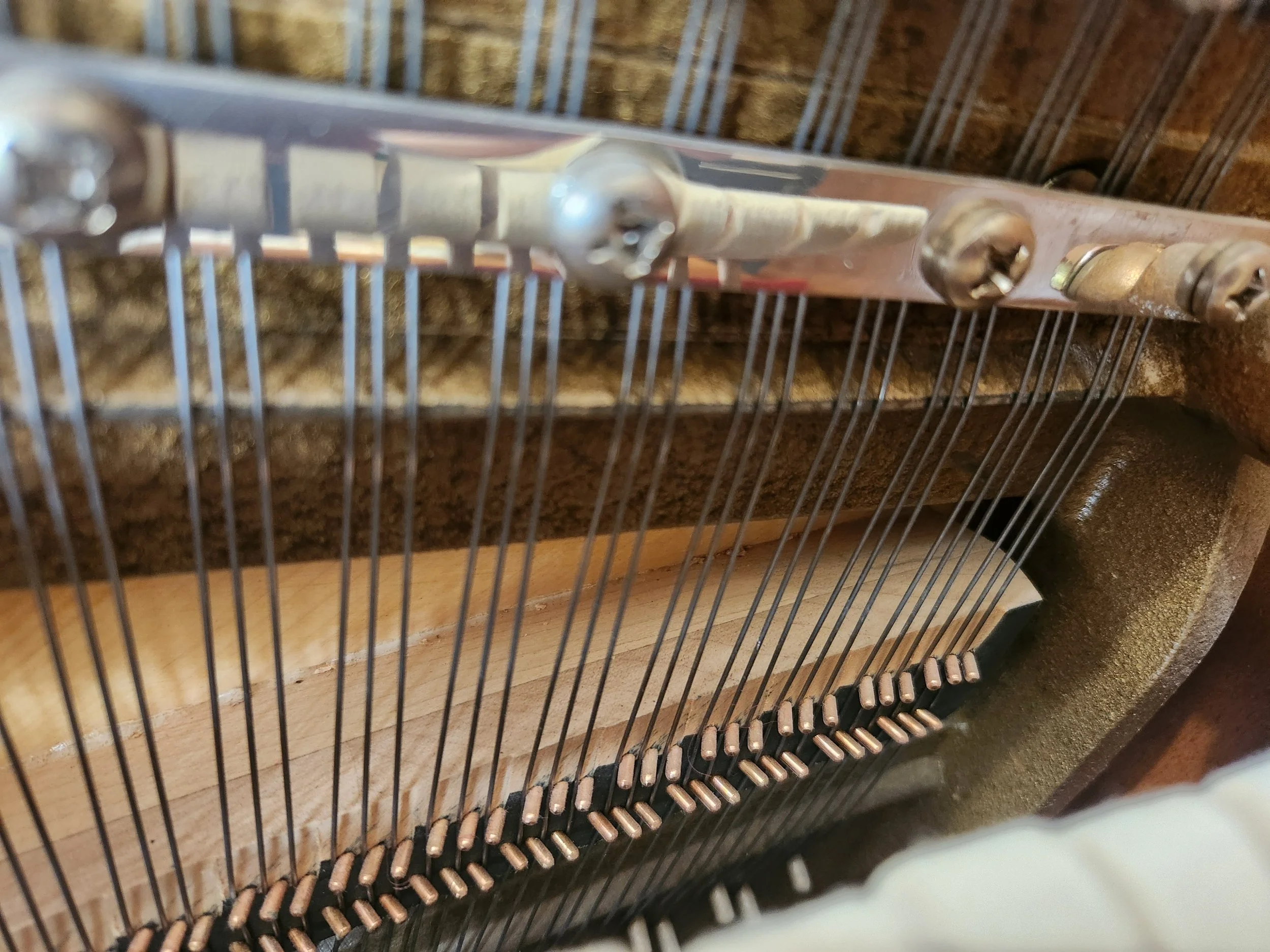
This photo shows how thin and short the highest treble strings are.
How Piano Strings Vary Across the Keyboard
The strings throughout a piano are not all equal.
Tenor & Treble: The length and thickness of the tenor and treble strings vary across each section, progressively getting smaller in diameter and length from low tenor to high treble.
Bass: The bass strings differ significantly. To produce a lower sound while keeping the string shorter, manufacturers add mass by wrapping the string in copper (although some older pianos used nickel). The added mass allows the string to be shorter and still produce the required low pitch. The lowest notes are often double wound with copper.
In fact, a plain steel wire string that is long enough to produce the pitch of the lowest C on the piano would have to be much longer than a 9-foot grand!
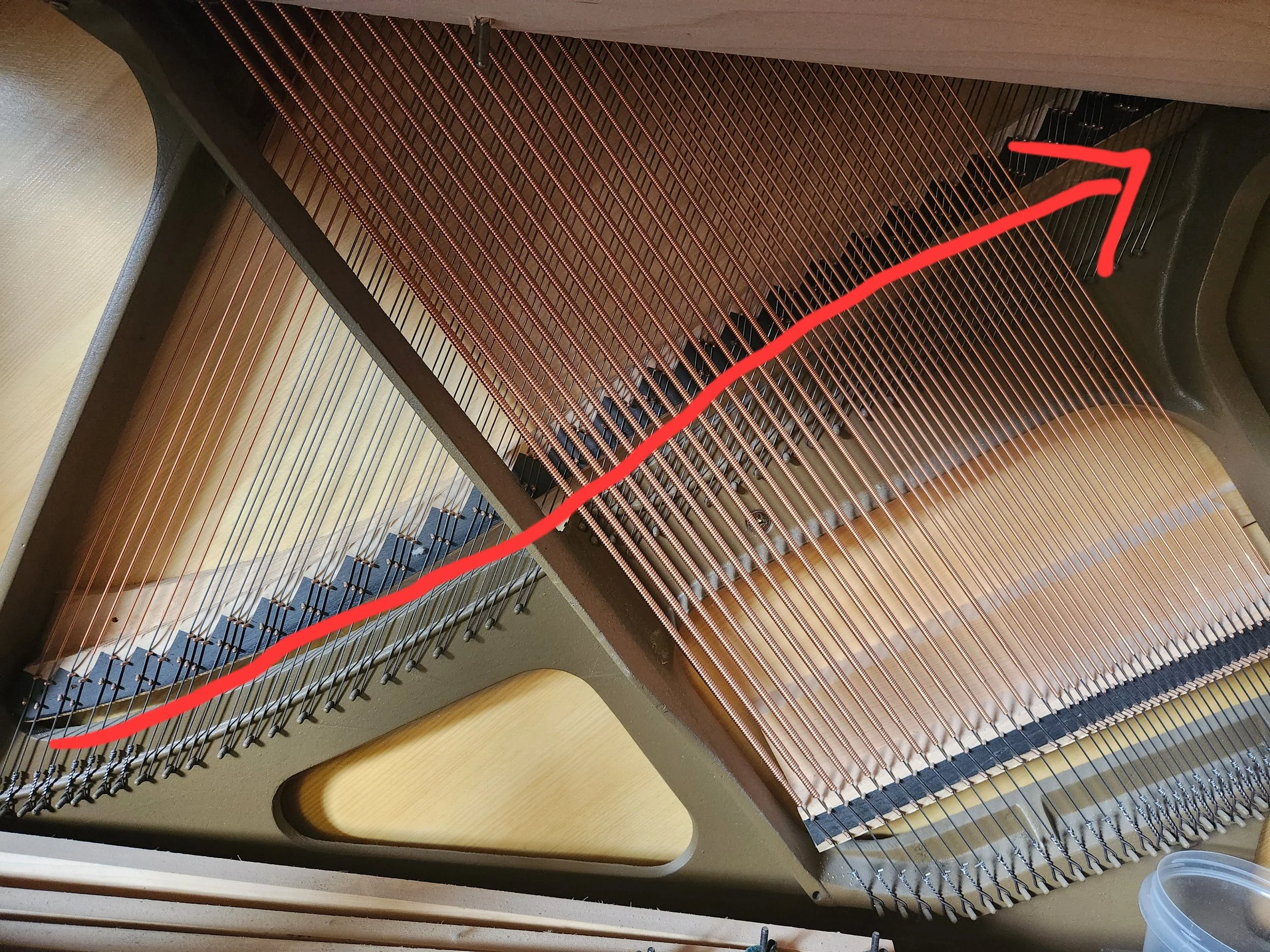
This photo shows how the strings get progressively shorter toward the treble side of the piano. The red line indicates the bridge, which determines the end of the speaking length.
The Compromise of Super-Short Pianos
The thing about a super-short piano is that the strings also have to be super short, which means the scale design has to be altered quite drastically.
An optimal combination of measurements within a scale design creates the "best" tone and sound. A high-end 9-foot grand that prioritizes quality over affordability and size convenience will have strings much closer to what the piano designer is aiming for. A conveniently sized apartment piano will be the furthest from that optimal scale design.
The tone of a bass note sounds much better if the string is longer rather than shorter and fatter. When the scale design is pushed too far from optimal:
Tone is compromised: The bass sound in small uprights or spinets can often sound nasal and metallic. You would be hard-pressed to find a warm, full-sounding bass in a spinet.
Once you reach the size of a Yamaha U1, the bass develops a more pleasant tone. However, bass quality varies across smaller pianos. For example, a Hoffmann (Bechstein) can produce a decent sound, while other small pianos may not.
Pitch centre becomes unclear: Because of the (in)harmonics in short bass strings, small pianos have an inherently imprecise pitch centre. As a result, bottom notes often sound slightly out of tune despite a skilled technician's best efforts. We are forced to choose what sounds best because perfection isn't possible.
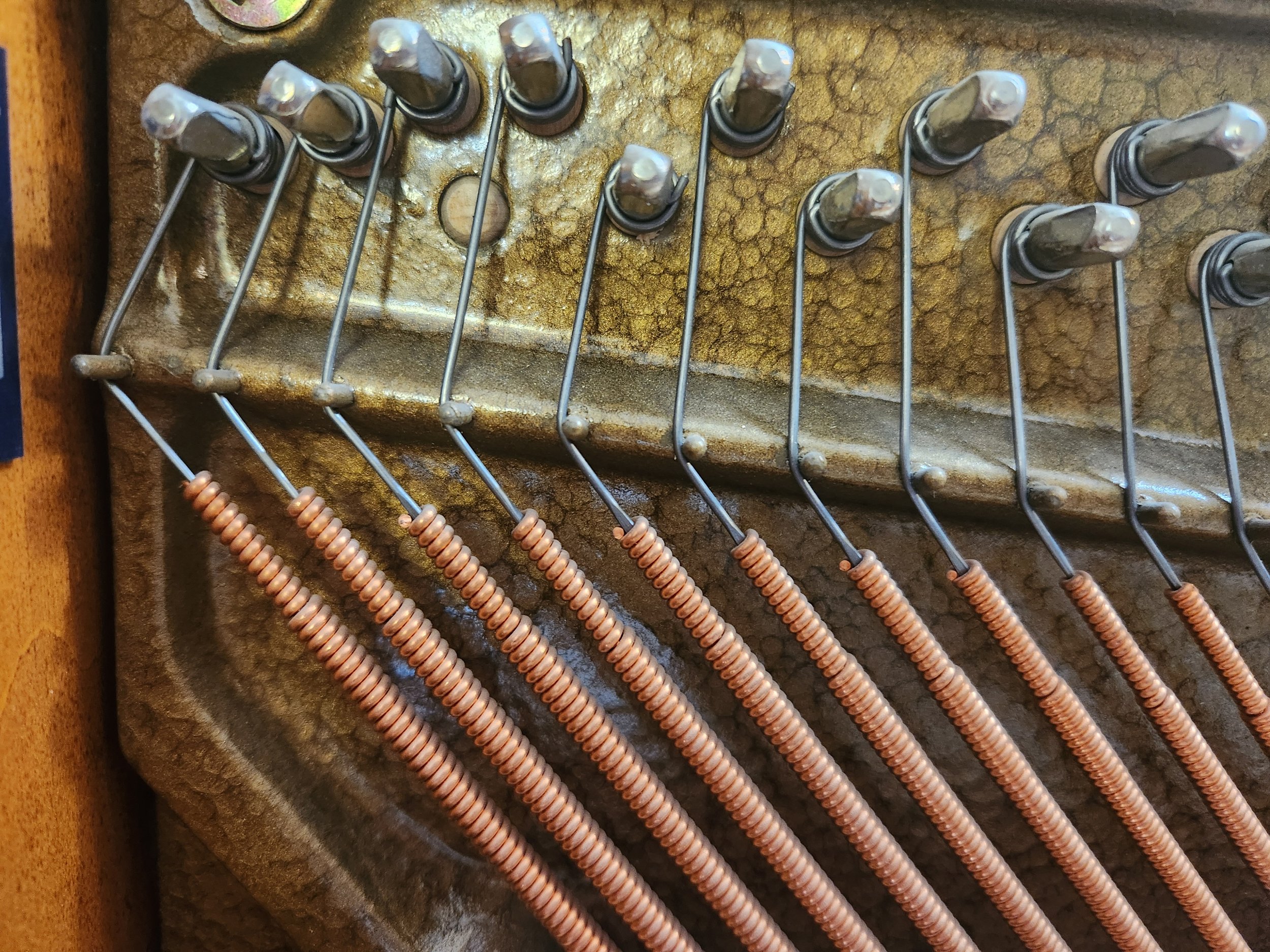
This photo shows the really thick bass strings.
Choosing the Right Size for Your Space
Ultimately, choosing a smaller piano usually comes down to practical factors like budget, room dimensions, and intended use. While most people would prefer a larger instrument, a smaller model makes sense if space is tight or you're just starting out.
However, the more experienced and particular you are about tone, the more you'll dream about a grand piano that's at least six feet… or even bigger.
Just remember to keep room size in mind: a 6-foot grand in an appropriately sized room will be much preferable to a 9-foot grand in a room that is too small, where there is nowhere for the sound to go.
The Bottom Line
At the end of the day, there's no single "perfect" piano size… only the right piano for your budget, personal preference, purpose, and goals. Understanding how scale design affects bass tone helps you know what to expect when choosing an instrument for your space.
Coming up in Part 2: We look past the strings and examine soundboard design!
Have questions about finding the right piano for your goals? Reach out anytime!
