
So far in this series, we’ve covered how shrinking a piano affects Scale Design and Soundboard Design. In this final installment, we're looking at the direct interface between the pianist and the instrument: the keys.
If you’ve ever played different pianos and noticed varying levels of responsiveness and smoothness, you’ve encountered the complex interplay of key design and other factors, such as regulation, that significantly influence the instrument's touch and feel. In this blog, we'll cover how much weighted feedback keys offer: when it provides the right balance, it responds predictably to your touch. Without effectively balanced keys, it can be difficult to control the colours, volume, and character you aim for.
(Note: If a key feels sluggish, wiggly, or sticky, that is usually more of a maintenance/regulation issue.)
Keys as Levers: Length and Control
At its core, a piano key is simply a mechanical lever. Basic physics dictates that a longer lever offers greater control and leverage than a short lever.
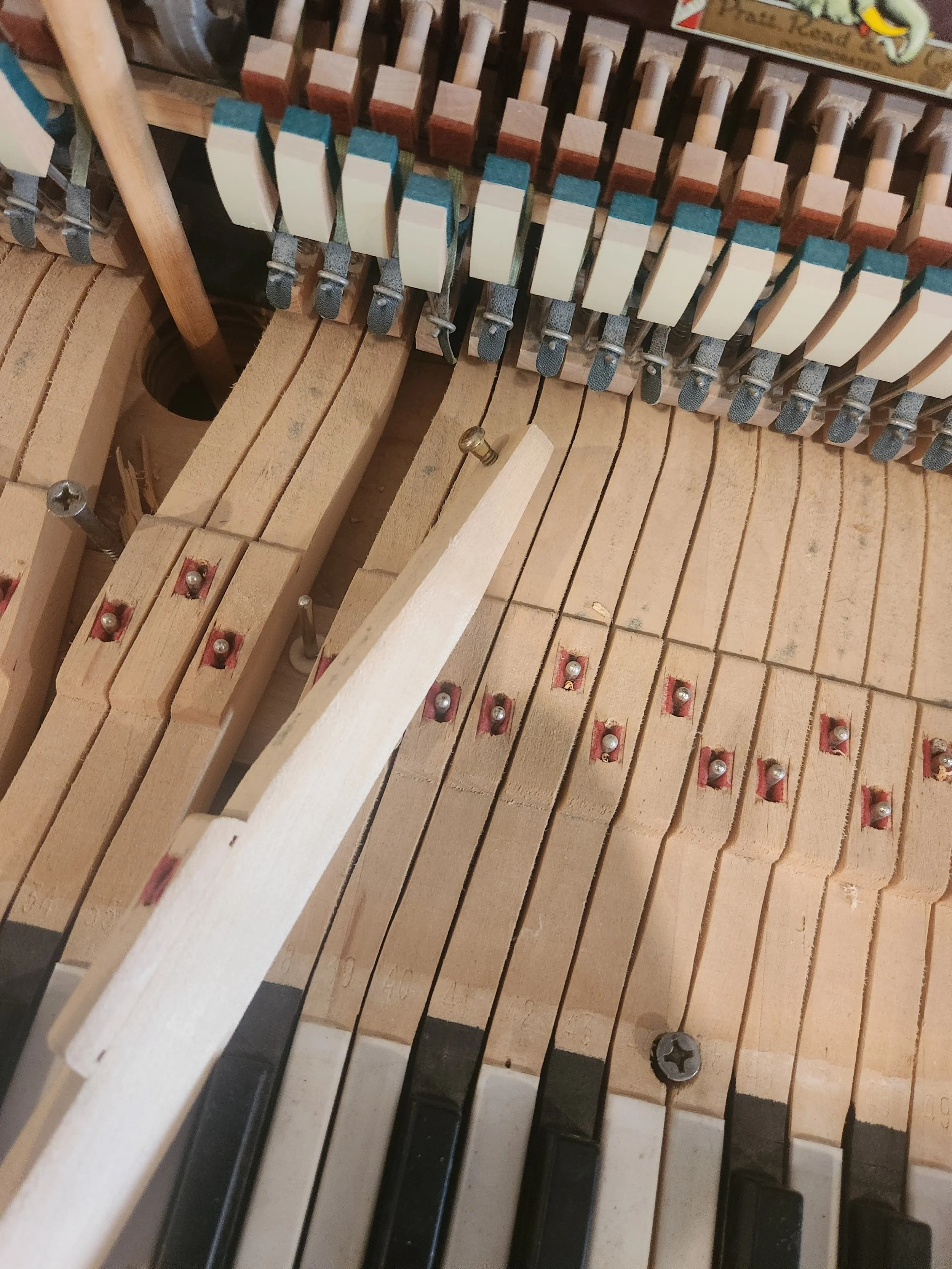
In large grand pianos: The portion of the key you see is only a fraction of its total length. The long key stick extends deep into the cabinet, allowing for nuanced dynamic control whether you press the front of the key or deep near the fallboard.
In small or spinet pianos: The keys are significantly shorter. With less mechanical leverage, subtle dynamic and colour control becomes much harder to achieve.
Strategic Materials: Hardwood vs. Softwood
Because smaller pianos are often built for affordability, manufacturers must decide where to use premium materials.
Softwood is light and economical, but hardwood offers the strength and durability required at high-wear contact points. High-quality piano designers use softwood for the bulk of the key body to keep it light, and strategically insert hardwood at key wear areas:
1. Key Buttons
In the middle of each key, a metal pin extends upward from the keybed. This pin passes through the key, holding it in place as it moves.
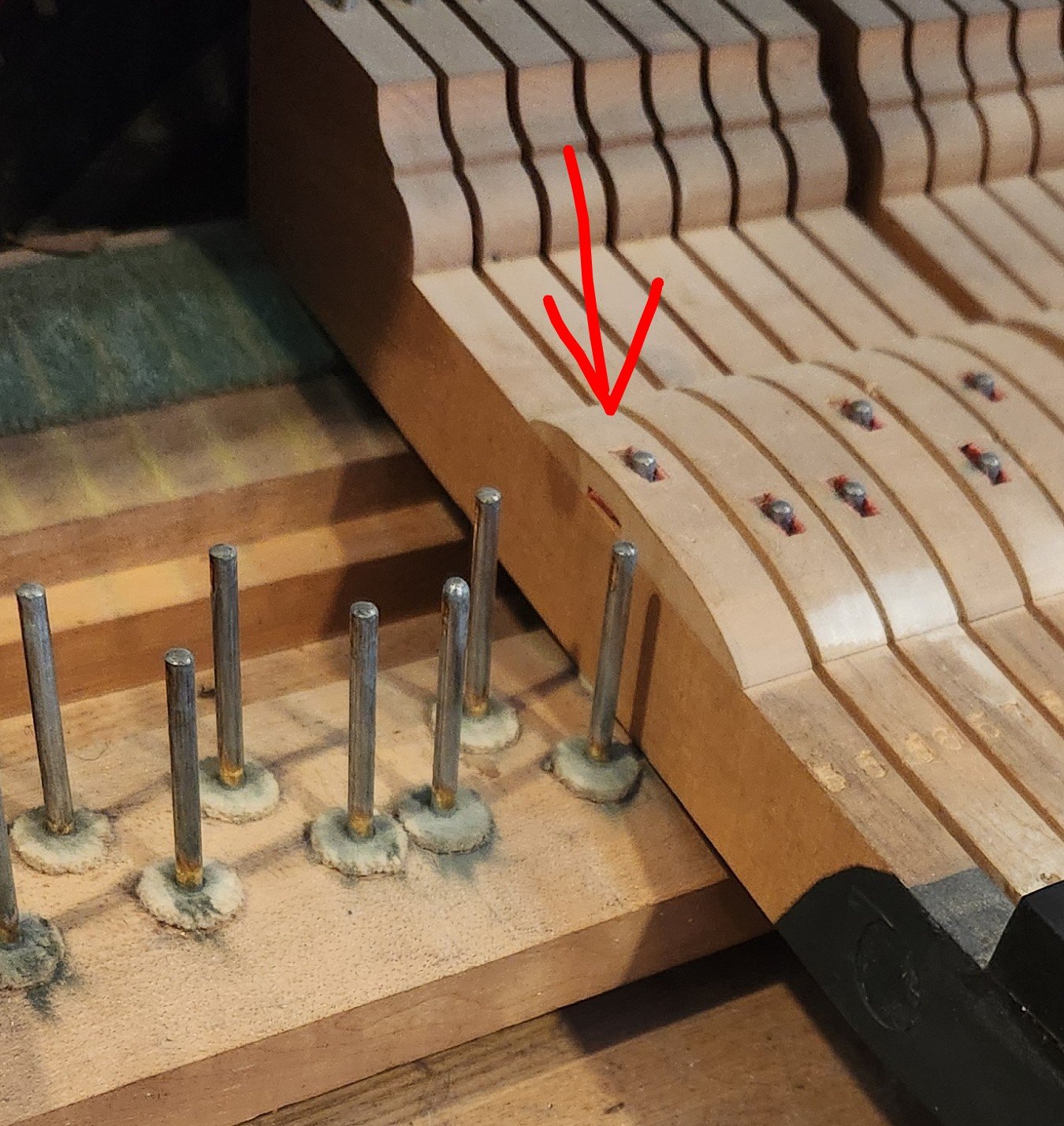
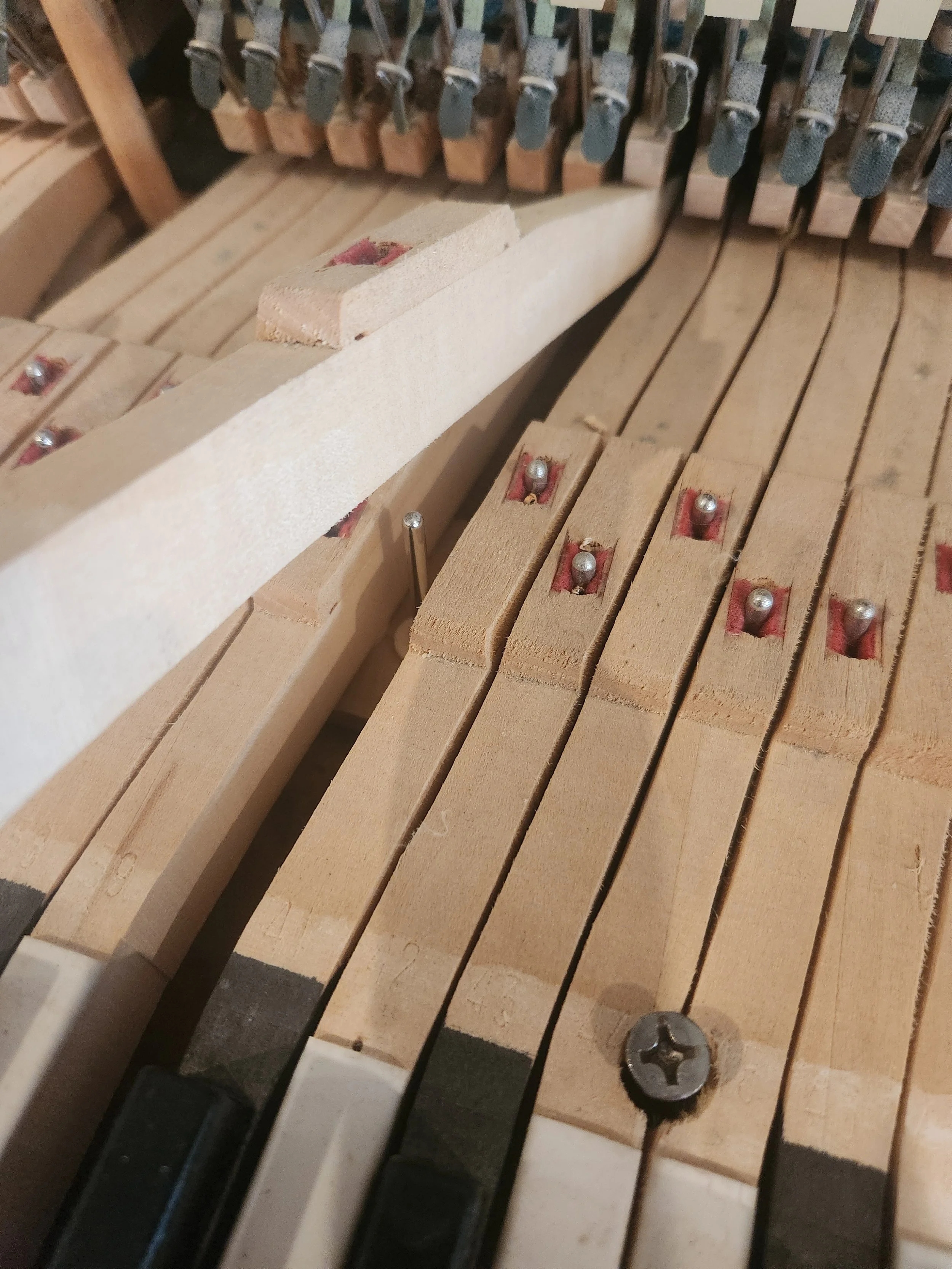
Because this is a major point of friction and wear, quality keys feature a key button (a separate piece of hardwood glued onto the top of the key where the pin enters).
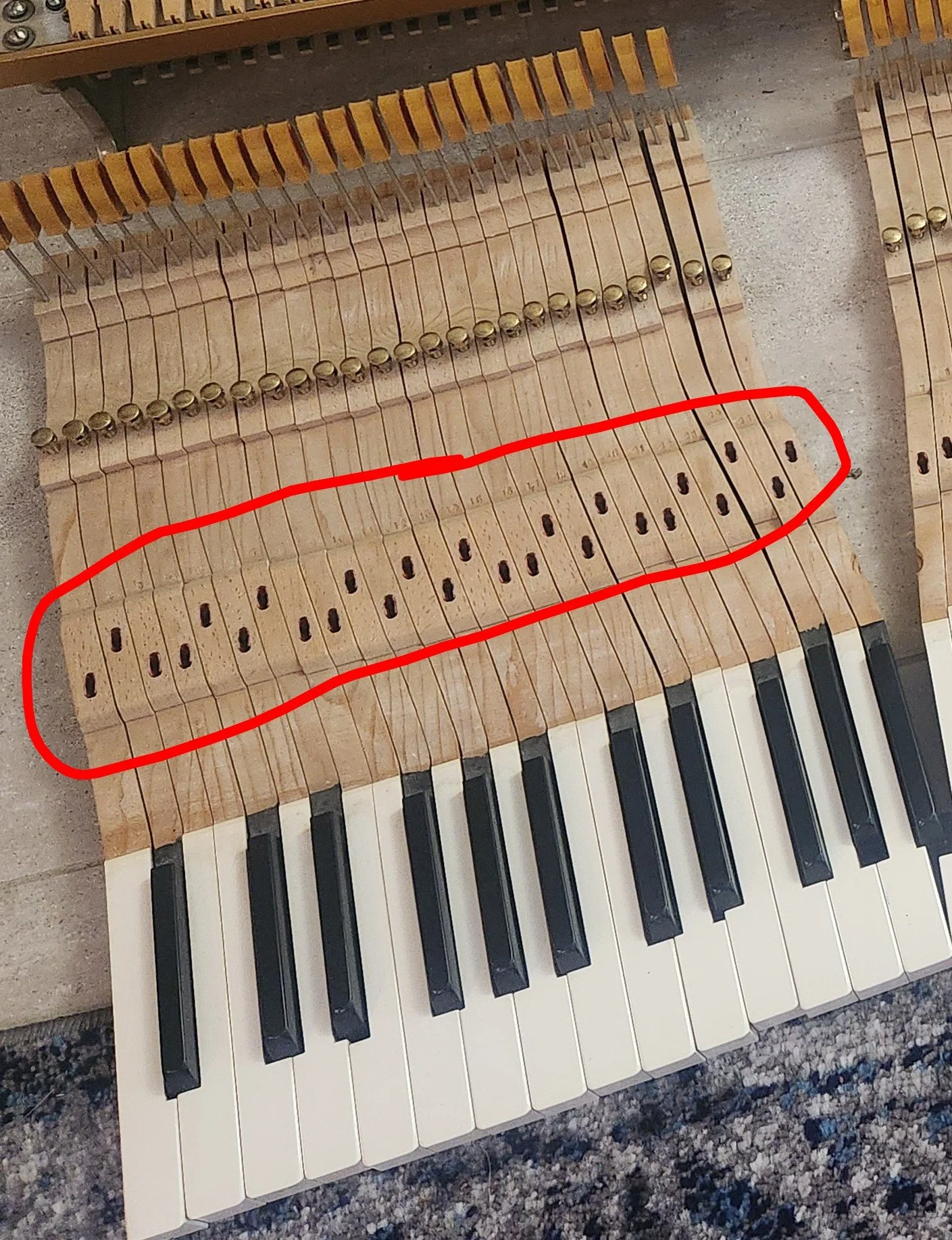
Pianos prioritizing affordability over durability can skip key buttons entirely, running the pin straight through the soft wood body.
2. Wire Insert Points
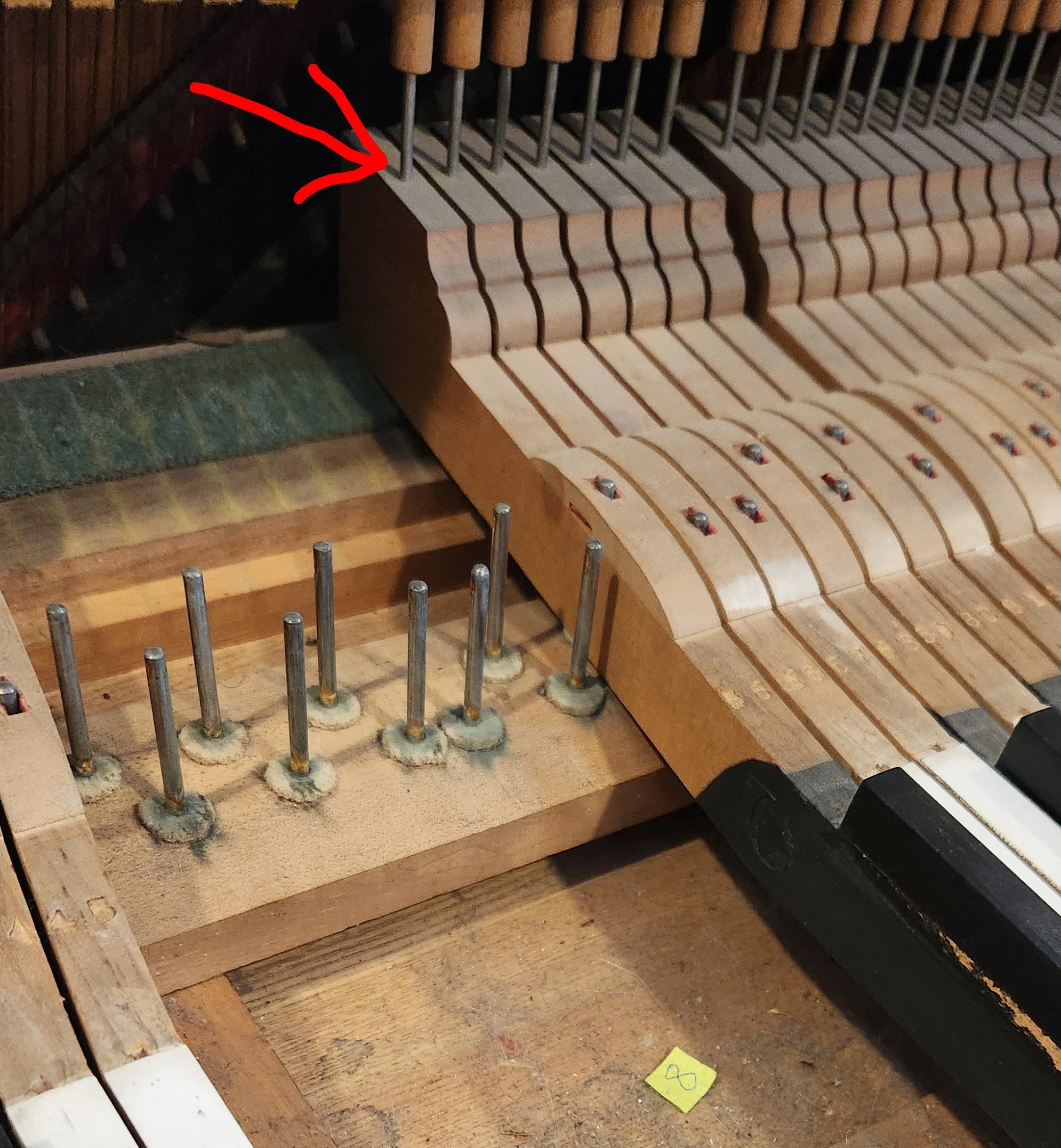
At the back end of both upright and grand keys, metal screws/rods are inserted into the wood. Using hardwood at these points reduces the risk of the wood splitting. Quality designers reinforce the back end of the key stick with a block of hardwood, so the wire stays firmly anchored.
3. Woven Cloth and Bushings
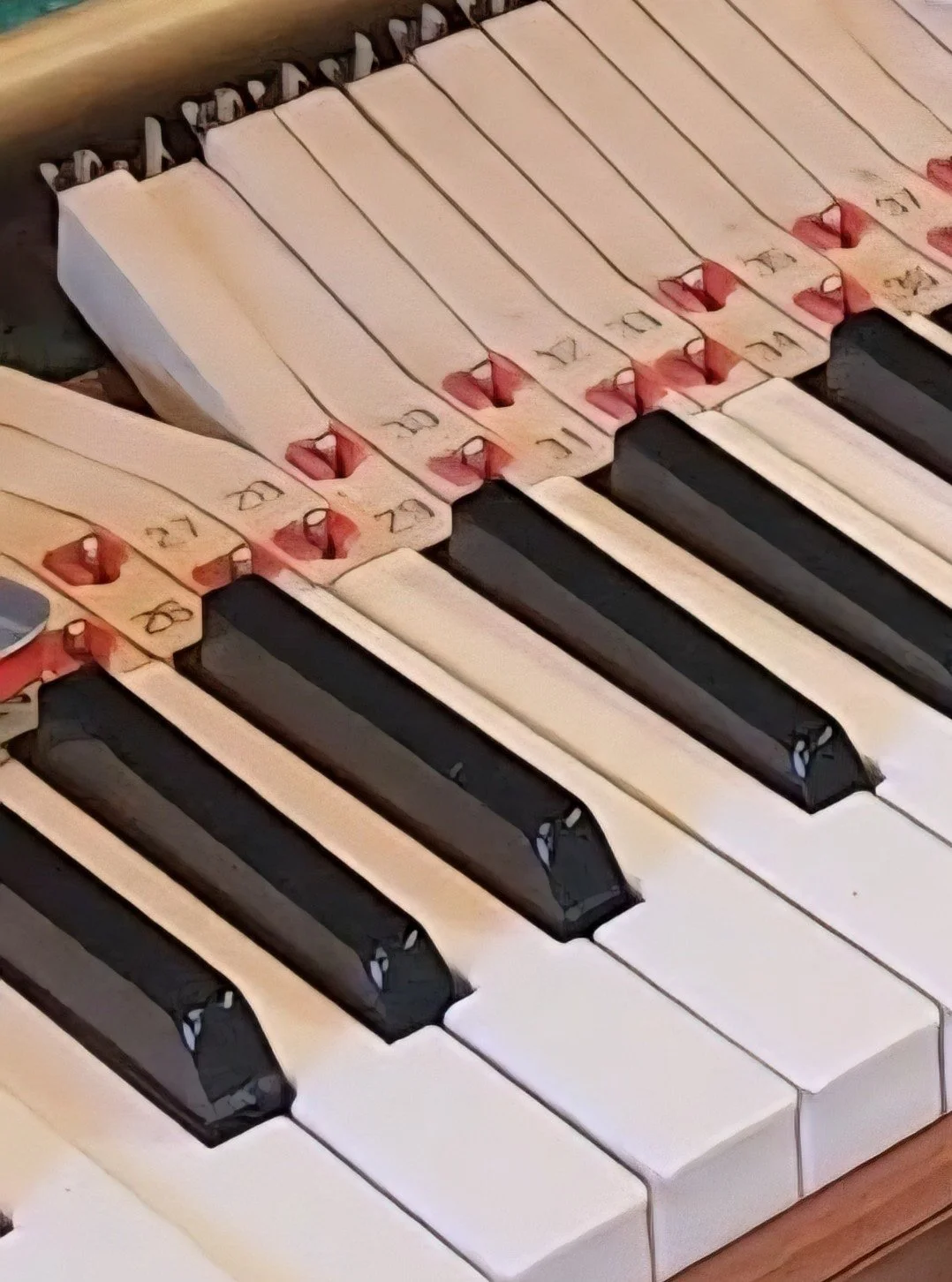
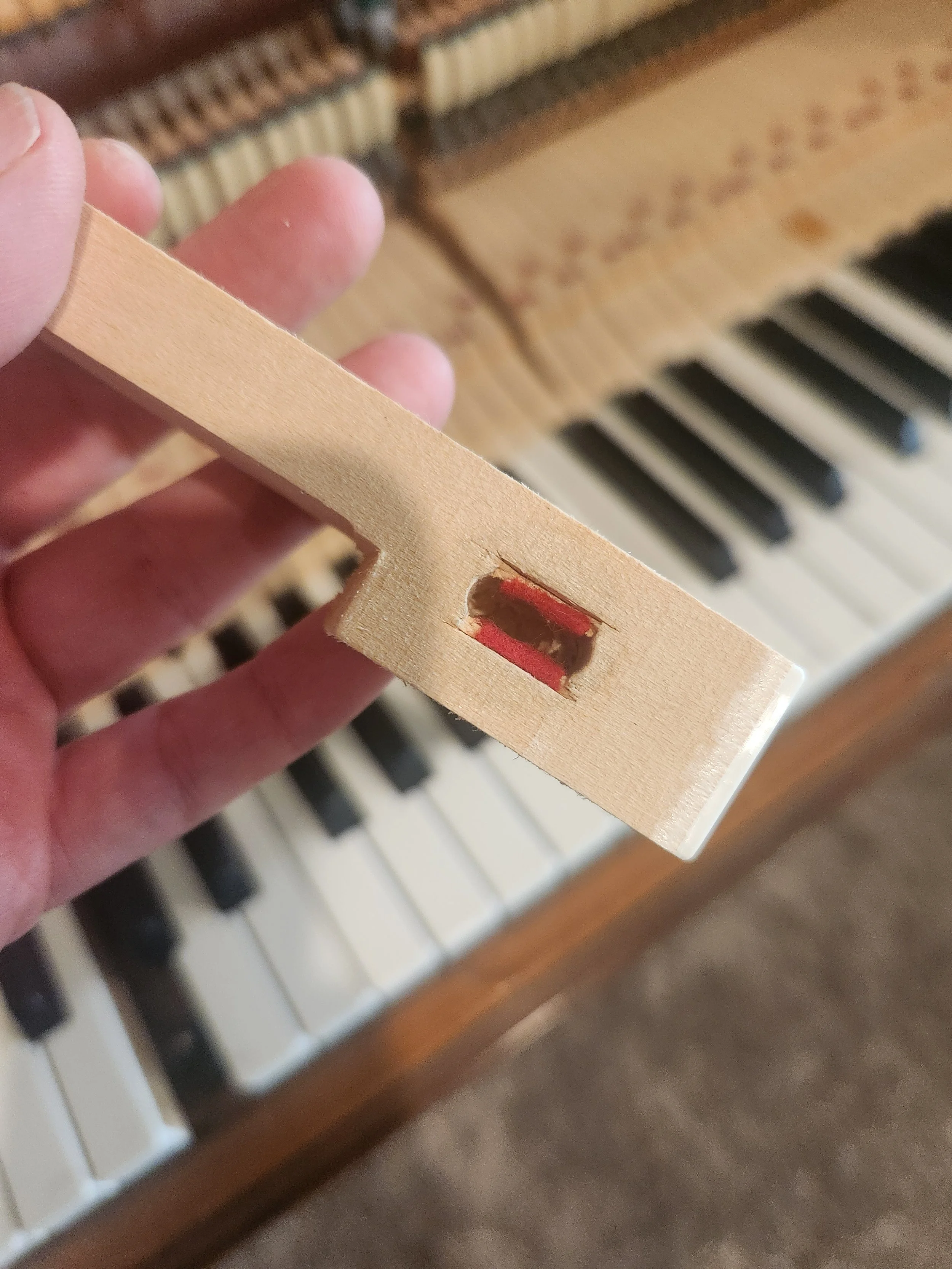
The red cloth lining the key pin hole (called the balance rail key bushing) cushions the key, reduces mechanical noise, and keeps it from feeling wobbly under your fingers. Superior pianos use tightly woven cloth (or even durable leather) to withstand friction. Cheaper felt wears down quickly, leaving the key feeling loose and unstable.
Warping, Twisting, and Key Stability
Because wood responds to environmental shifts, long keys can warp or twist over time. To prevent keys from rubbing against their neighbours:
High-end makers use quartersawn lumber or laminated keys to ensure dimensional stability.
While extremely short keys are less prone to severe warping, mid-length keys made without premium cuts of wood are notorious for warping and rubbing together over time.
What About "Weighted Keys"?
If you remove a key from a quality acoustic piano and look at its side profile, you will often see small, round lead weights embedded directly in the wood. Designers use precise calculations to determine the exact amount and placement of these weights (towards the front or back) based on the resistance of the action mechanism. This process takes time and specialized expertise, which is why higher-end pianos feature custom-weighted keys, while budget instruments can skip this step. On console and spinet pianos, this can be the sole cause of keys that don’t repeat fast enough!
When digital piano manufacturers advertise "weighted keys," they're aiming to mimic the feel of an acoustic piano. However, weighting in an acoustic piano is a precise mathematical art that lets musicians create a wide range of sounds and colours through nuanced touch.
While electronic pianos can respond to touch, they are fundamentally limited in what they can do. When you strike a key harder or softer on an electronic piano, the primary variable that changes is volume. In contrast, with an acoustic piano, the hammer interacts with the string in different ways depending on how you play, allowing a richer palette of tonal variations beyond volume.
This intrinsic difference highlights why an electronic instrument, despite its technological advancements, cannot truly replicate the depth of expression found in traditional acoustic pianos.
The Bottom Line
When a piano gets smaller or more budget-focused, manufacturers shorten key length, often omit hardwood reinforcements and key buttons, and completely omit or simplify precision lead-weight balancing.
Understanding these engineering compromises helps explain why two pianos can feel and perform so differently… and why serious musicians often hold out for a larger instrument with full-length, hardwood-reinforced keys.
Thank you for following along with this 3-part series on The Small Piano Trade-Off!
Have questions about finding the right piano for your space, budget, and playing goals? Reach out anytime!
