
The Glass Ceiling: When to Upgrade to a Grand Piano
There comes a moment in every pianist's journey when they hit a "ceiling."
You’ve practiced your scales, mastered the dynamics, and put in the hours, yet your progress feels stagnant. Could it be that the instrument itself is holding back your untapped potential?
When clients ask me when it’s time to transition from an upright to a grand piano, I often use a simple comparison: the SUV vs. the racecar.
An SUV is a reliable, high-quality tool. It can go fast and get the job done. But no one expects an SUV to compete with a sleek, low-profile race car on a professional track. To develop the reflexes and precision of a competitive driver, you eventually need a machine designed for that specific level of performance.
For those just starting out or playing purely for enjoyment without needing advanced technical experience, an upright is a wonderful choice. However, for intermediate- to advanced-level musicians ready to break through that ceiling, a good-quality grand piano should be the priority.
Three strengths that a grand piano offers are: control, power, and nuance.
Gravity is on Your Side
The most significant difference lies in the "action" (the internal mechanisms).
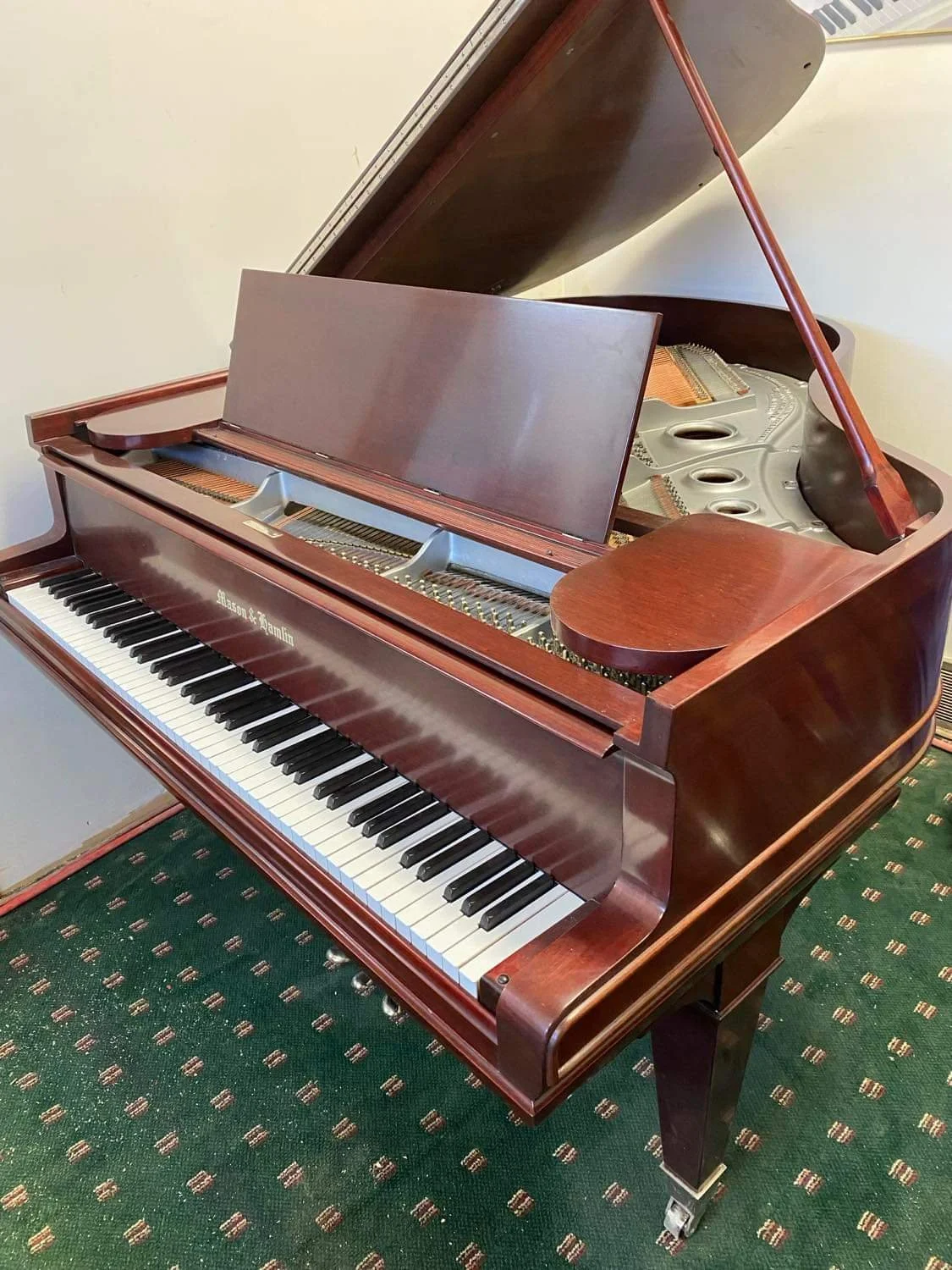
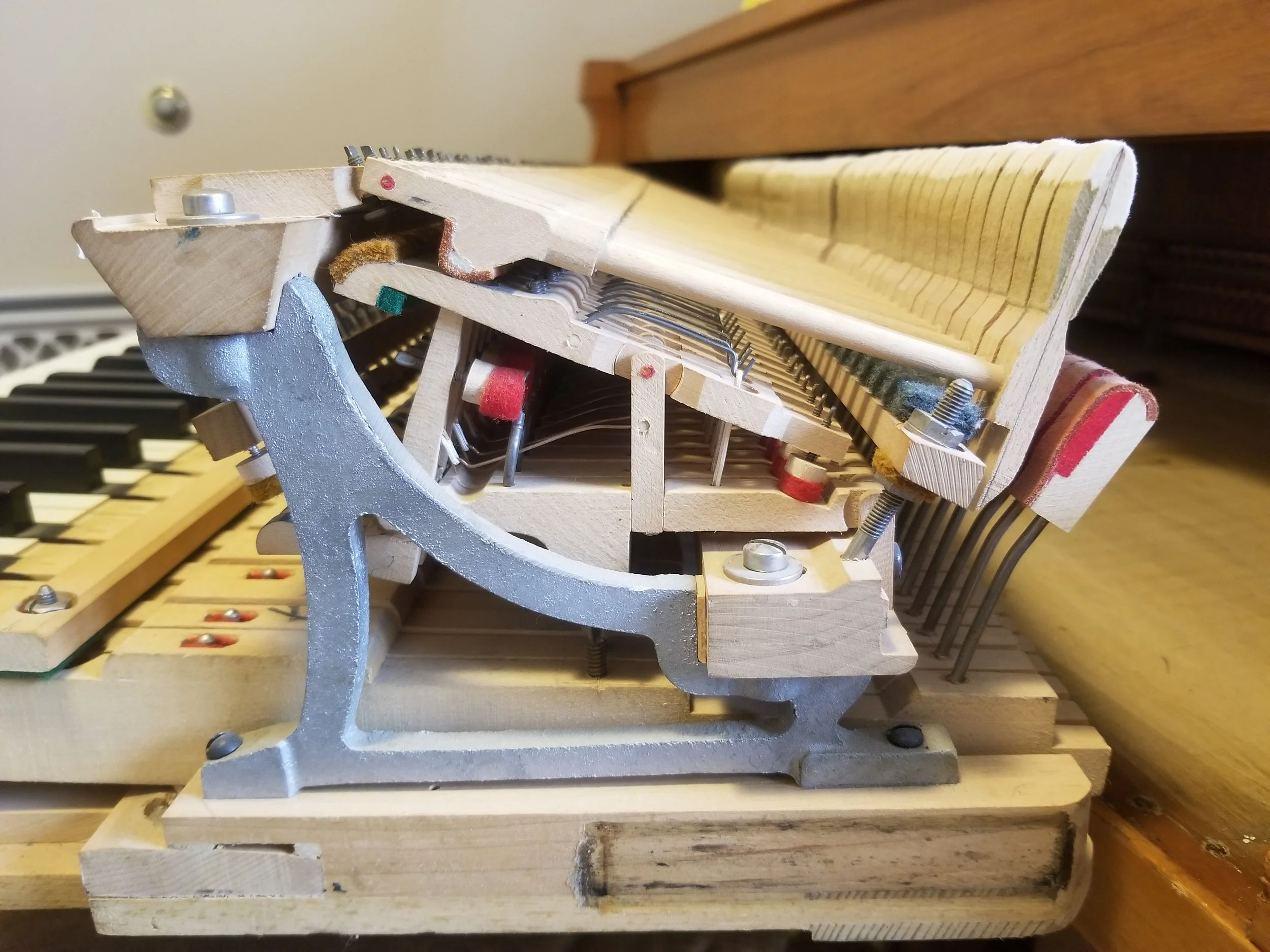
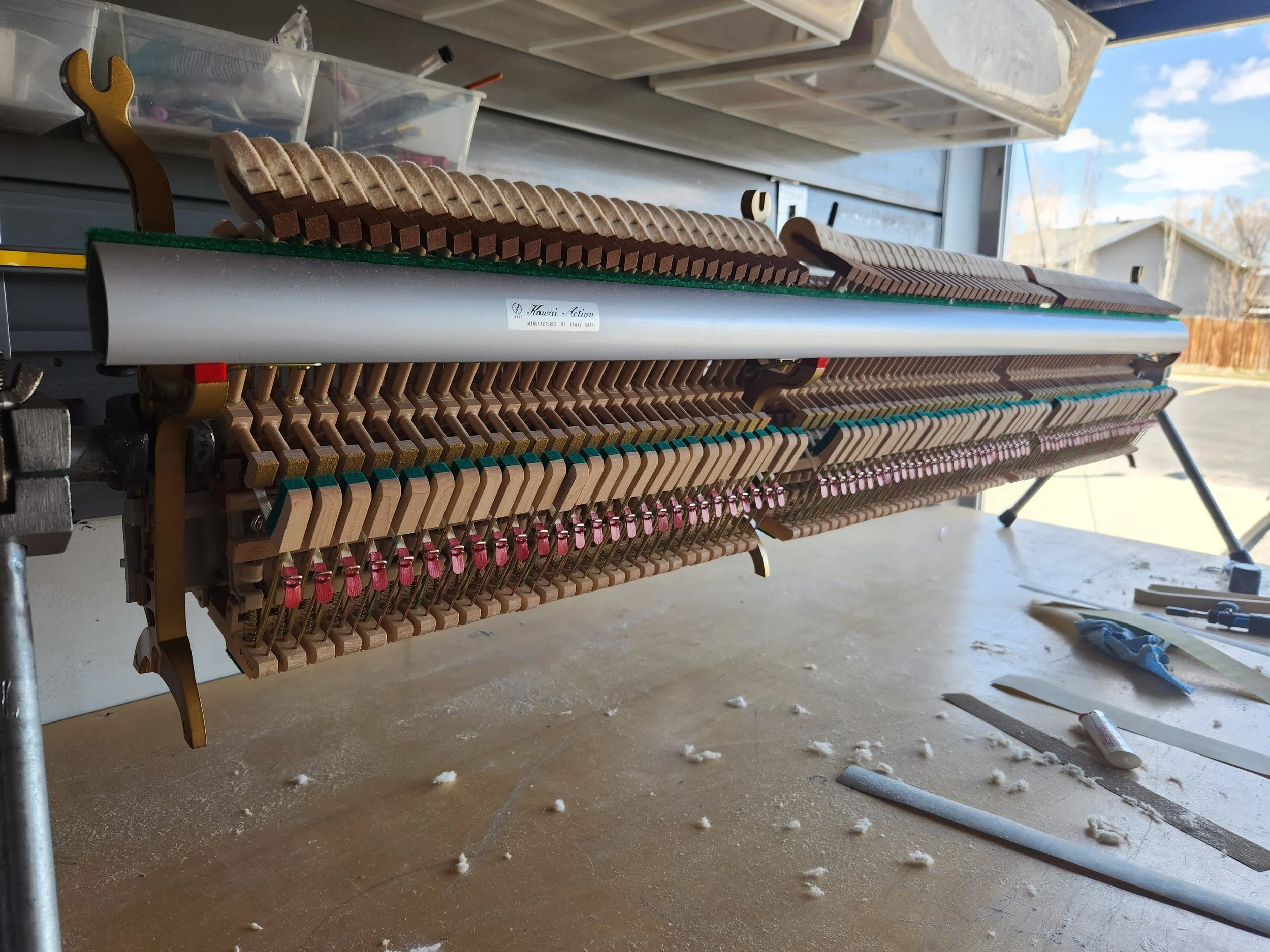
In an upright piano, the hammers sit vertically and move forward and back (as seen in the second photo). In a grand piano, the hammers lie horizontally and move up and down, so gravity is on their side (as seen in the first photo).
Because grand hammers are relatively horizontal, they use gravity to return to their original position more quickly. When gravity does the work, you get:
Faster Repetition: The hammers reset and are ready to strike again quickly and efficiently, allowing for rapid-fire notes that an upright typically cannot catch.
Greater Control: You can execute much finer gradations of touch, especially at high speeds.
Pedal Systems: Beyond Just "Quiet"
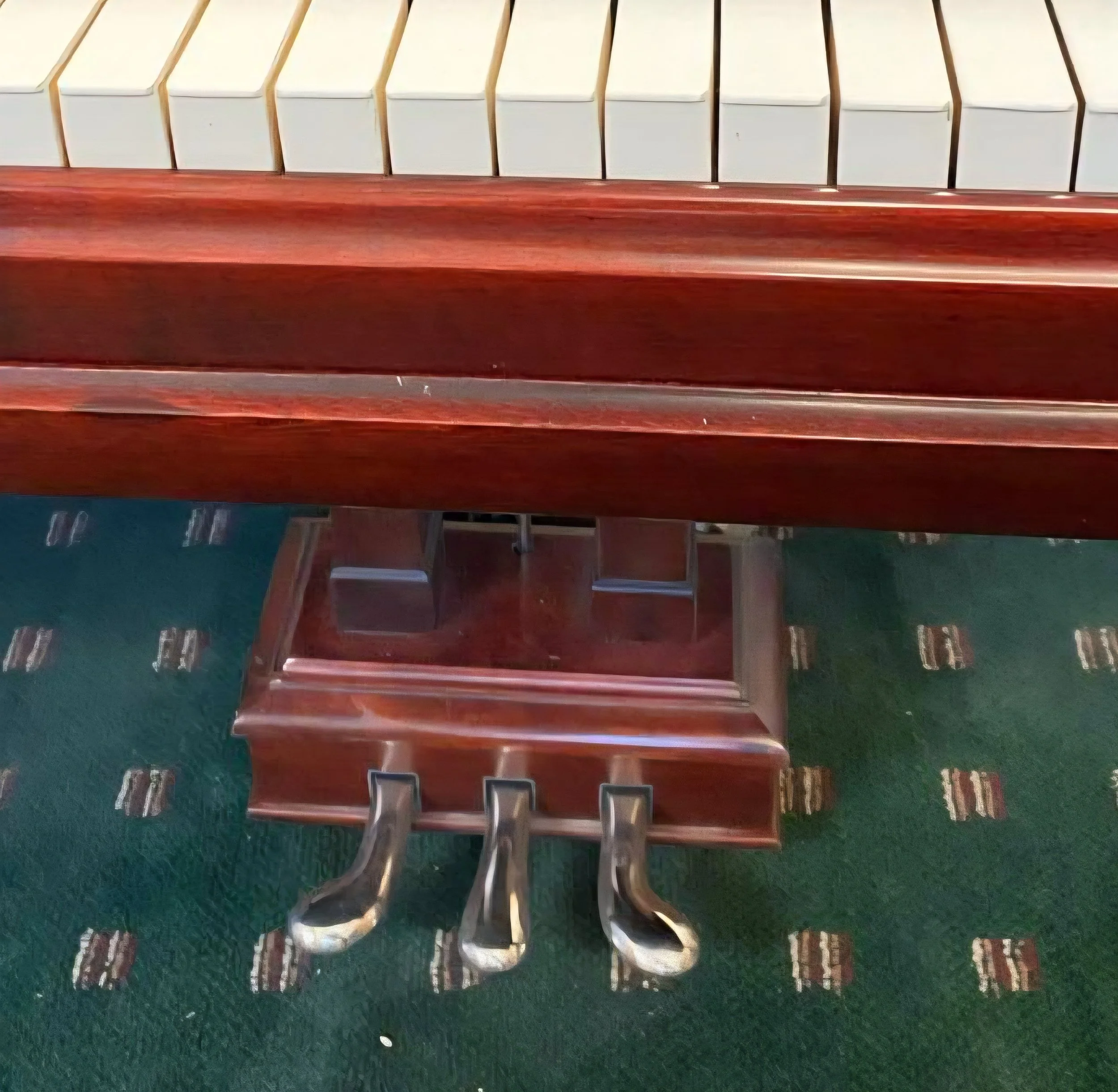
Many players don’t realize that the pedal mechanisms are designed differently on these two instruments, enabling techniques on a grand that are mechanically impossible on most uprights.
The Soft Pedal/Una Corda (Left): On an upright, the soft pedal moves the hammers closer to the strings to reduce momentum. It makes the piano quieter, but it doesn't change the quality of the sound, and it reduces control of the hammer significantly. On a grand, the pedal shifts the entire keyboard to the right. The hammers strike fewer strings and/or hit them with a different part of the felt. This expands your tonal palette, changing tone and colour of the notes, not just the volume.
The Sostenuto (The Middle Pedal Mystery): In the upright piano, the middle pedal can be a bit of a marketing ploy. On some uprights, it's just for show and does nothing. On many uprights, it might be a practice pedal that drops a piece of felt between the hammers and strings to muffle the sound, or a "bass sustain" that only lifts the dampers on the bass section of the piano. On a high-quality grand (and the odd high-end upright), the middle pedal is a true Sostenuto. It allows you to sustain specific notes while keeping your hands free to play crisp, staccato passages elsewhere… a vital tool for advanced repertoire.
The Sustain Pedal (Right): While both pianos have a damper pedal, a grand piano's sustain is significantly more responsive. This allows for advanced "flutter pedalling" and half-pedal techniques, giving you a level of resonance control that is less nuanced on an upright. The dampers on a grand, like the hammers, have gravity on their side.
Power and Resonance
A grand piano isn't just "louder." The design, the length of the strings, and the massive horizontal soundboard allow for a much greater dynamic range and richer overtones.
Since most competitions and performances take place on a grand piano, practicing with this level of resonance is essential. It allows you to develop your voicing skills (how to make specific melodic or harmonic lines stand out within a complex chordal framework) in a way that an upright piano's compact design simply cannot replicate.
Quality is Key
Of course, maintenance and quality are the ultimate deciding factors. A poor-quality or neglected grand can be outperformed by a high-end, well-maintained upright any day. But for those ready to move past the "SUV" and see what they are truly capable of, the grand piano offers an elevated experience, allowing the musical ideas in your mind to take shape beneath your hands.
